Anhedonia ADHD: Why Joy Can Feel Flat and What to Do Next
When people search for anhedonia ADHD, they are often trying to name a very specific kind of stuckness: the mind wants interest, novelty, or connection, but familiar sources of pleasure feel muted. ADHD can make this more confusing because boredom, task avoidance, burnout, depression, medication changes, and emotional numbness may overlap. A gentle first step is to describe what has changed, when it happens, and whether pleasure is absent, delayed, or hard to start. If you want a private way to organize those observations, a gentle anhedonia self-check can support reflection before you decide what to discuss with a clinician.

Can ADHD Cause Anhedonia?
ADHD is usually described through attention, hyperactivity, impulsivity, and executive function, but it also affects reward, motivation, time perception, emotional regulation, and effort. That is why ADHD and anhedonia can feel closely linked, even though anhedonia is not limited to ADHD.
Anhedonia means reduced ability to feel pleasure or interest in things that used to feel rewarding. In ADHD, the issue may be partly about reward timing. A task, hobby, song, game, meal, or relationship may still matter to you, yet the reward signal may arrive too late, too weakly, or only when novelty is high. The result can look like "I do not care," when the inside experience is closer to "I cannot feel the spark."
Still, it is important not to reduce every flat feeling to ADHD. Anhedonia can also appear with depression, chronic stress, trauma, substance use, sleep disruption, grief, and some medical or medication-related situations. ADHD may raise vulnerability by adding executive friction and emotional exhaustion, but it is not the only possible explanation.
A practical way to think about it is this: ADHD can make pleasure harder to access, sustain, or initiate. Anhedonia describes the reduced pleasure itself. When both are present, people often need support for both the brain's "getting started" system and the emotional reward system.
ADHD Anhedonia Symptoms: What It Can Feel Like
ADHD anhedonia symptoms can be subtle because they do not always look dramatic from the outside. Some people continue working, replying to messages, parenting, studying, or keeping routines, but the felt reward is missing.
Common patterns include:
- Hobbies that once felt absorbing now feel blank after a few minutes.
- Music, food, touch, humor, games, or creativity feel less vivid.
- You still want connection, but social plans feel strangely unrewarding.
- You chase novelty, scrolling, shopping, snacks, or new projects, yet satisfaction fades quickly.
- Starting an enjoyable activity feels almost as hard as starting a chore.
- You feel relief when something is canceled, even if you also feel lonely.
- You keep asking whether you are lazy, bored, depressed, burned out, or simply "bad at life."
The key detail is not whether you do activities. It is whether your nervous system seems to register them as rewarding. Someone with ADHD may look busy but feel under-rewarded. Someone with anhedonia may participate but feel disconnected from the pleasure they expected.
Physical anhedonia often shows up through sensory flatness: food tastes less enjoyable, music does not land, exercise brings little afterglow, or touch feels emotionally distant. Social anhedonia shows up through reduced pleasure in conversation, intimacy, shared humor, or group belonging. Musical anhedonia ADHD searches usually sit in the physical or sensory category, especially when a person notices that songs they used to love no longer create chills, energy, or emotional color.

Anhedonia vs Apathy vs Boredom in ADHD
Many readers searching anhedonia reddit ADHD threads are really trying to separate three experiences: anhedonia, apathy, and boredom. They can overlap, but they are not identical.
| Experience | Core question | How it may feel in ADHD |
|---|---|---|
| Anhedonia | "Why does this not feel good anymore?" | You may still care about the activity, but pleasure or emotional reward feels muted. |
| Apathy | "Why do I not care or act?" | Motivation, concern, or drive feels low, even for things that logically matter. |
| Boredom | "Why is this not stimulating enough?" | The activity may feel too slow, familiar, or low-novelty for the ADHD brain to engage. |
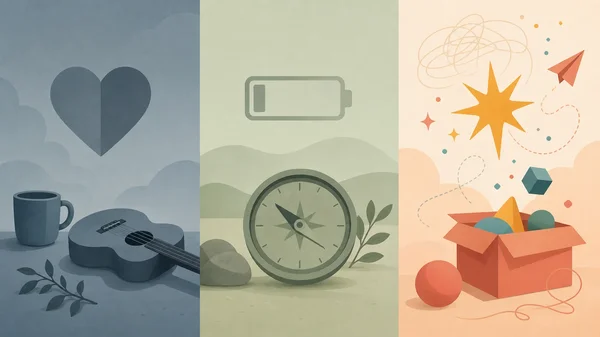
This distinction matters because the next step can differ. If boredom is the main issue, novelty, challenge, body doubling, timers, or changing the environment may help. If apathy is central, you may need more support around energy, values, depression, stress, or overload. If anhedonia is central, the question becomes how to notice tiny reward signals again without pressuring yourself to "feel happy" on command.
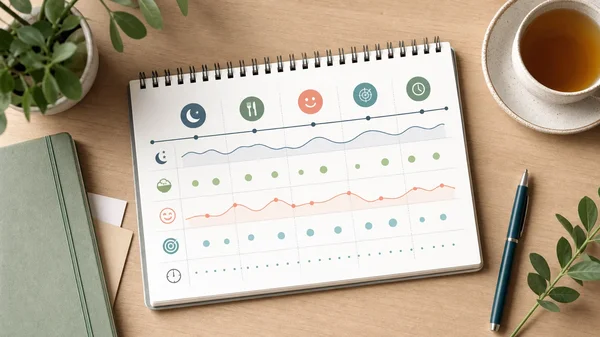
A short tracking exercise can help. For one week, write down three columns: "What I did," "How hard it was to start," and "Any reward, even 1 percent." This keeps the focus on patterns rather than self-blame. It can also show whether the problem is initiation, enjoyment, recovery after effort, or all three.
ADHD, Depression, Autism, and Medication Context
Anhedonia in ADHD often deserves a wider lens. ADHD commonly co-occurs with depression and anxiety, and many people also identify with autistic traits or an ADHD autism profile. Each context can change how pleasure loss appears.
With depression, anhedonia may come with low mood, hopeless thoughts, sleep or appetite shifts, guilt, slowed movement, or thoughts of self-harm. With ADHD burnout, the flatness may follow long periods of masking, overcommitting, deadline panic, or constant self-correction. With autism, sensory overload, social fatigue, shutdowns, or changes in routine may make pleasure harder to access, even when interests still matter deeply.
Medication questions need careful handling. ADHD medication anhedonia searches often come from people who noticed emotional blunting, irritability, crash periods, or a narrower emotional range after starting, stopping, increasing, or missing medication. For others, well-fitted ADHD medication may improve access to pleasure by reducing chaos, improving follow-through, and making rewarding activities easier to begin.
That mixed reality is exactly why medication changes should be discussed with a qualified prescriber. Timing, dose, formulation, sleep, appetite, co-occurring depression, substance use, and rebound effects can all matter. Do not stop or change prescribed medication based only on an article or a forum post.
Some searches also ask, "What do the Japanese take for ADHD?" Japan has used a more limited and tightly regulated set of ADHD medications than some other countries, including options such as OROS methylphenidate, atomoxetine, guanfacine, and lisdexamfetamine in specific contexts. The practical takeaway is not to copy another country's medication pattern. It is to recognize that ADHD treatment choices depend on local approvals, age, safety rules, health history, and prescriber judgment.
If you are trying to make sense of anhedonia with ADHD medication, bring concrete notes to your next appointment: when the flatness appears, what changed recently, what improves it, what worsens it, and whether sleep, appetite, or anxiety changed at the same time. A structured anhedonia screening experience can help you gather language, but it should sit alongside professional guidance, not replace it.
How to Fix ADHD Anhedonia Gently
"How to fix ADHD anhedonia" is an understandable search, but the safest goal is not to force joy back. A better first goal is to lower friction, create conditions where small reward signals can be noticed, and get extra help when the pattern is persistent or risky.
Try these low-pressure steps:
- Reduce the start cost. Pick a five-minute version of an activity, not the full version. Open the instrument case, walk around the block, wash one cup, or play one song.
- Track micro-rewards. After the activity, ask, "Was anything 1 percent less bad, calmer, warmer, easier, or more interesting?" This trains attention toward small signals without demanding excitement.
- Add novelty carefully. ADHD brains often respond to new textures, places, sounds, formats, or challenges. Try a different route, playlist, recipe, game mode, art material, or study setting.
- Use body support. Sleep, food, movement, hydration, light exposure, and medication timing can change emotional bandwidth. These basics are not moral tests. They are inputs to the reward system.
- Make pleasure easier to enter. Put the guitar on a stand, preload the audiobook, keep walking shoes visible, or schedule a low-effort call with someone safe.
- Avoid shame-based motivation. "I should love this" often makes the activity heavier. "I am checking whether any small signal is present" is gentler and more useful.
- Review medication and mood patterns. If the flatness is new, intense, or tied to a medication change, talk with your prescriber.
- Seek support if life is shrinking. If daily tasks feel impossible, emptiness lasts for weeks, substances become a way to feel something, or self-harm thoughts appear, reach out to a healthcare professional or crisis support in your area.
One action component that often works for ADHD is a "reward menu." Make a short list with three categories: sensory comfort, novelty, and connection. Under each, write options that take less than 10 minutes. The point is not to feel amazing. The point is to give your brain several easy doors back into experience.
Another useful component is a "friction map." Choose one activity you miss, then list what blocks it: unclear first step, messy space, social pressure, perfectionism, boredom, fatigue, fear of disappointment, or low sensory payoff. Solve only the first barrier. For ADHD, changing the entry point often matters more than giving yourself a motivational speech.

Use ADHD Anhedonia as a Signal, Not a Verdict
Anhedonia with ADHD can feel personal, but it is often more useful to treat it as information. It may be telling you that your reward system is overloaded, under-stimulated, depressed, burned out, poorly rested, socially isolated, mismatched with your routine, or reacting to a medication pattern that deserves review.
You do not need to decide the whole story in one sitting. Start by naming the pattern, noticing whether it affects sensory pleasure, social pleasure, or both, and watching how it changes across sleep, stress, medication timing, novelty, and connection. If you want a calm structure for that reflection, a SHAPS-informed reflection tool can help you organize what you are experiencing before a conversation with a professional.
The hopeful part is that ADHD brains often respond to small environmental changes, external structure, novelty, and compassionate accountability. The careful part is that persistent anhedonia deserves respect. If joy has been absent for weeks, if you feel unsafe, or if your functioning is dropping, it is worth involving a clinician, therapist, or trusted support person.
FAQ
Is anhedonia a symptom of ADHD?
Anhedonia is not usually listed as a core ADHD symptom in the way inattention, hyperactivity, and impulsivity are. However, many people with ADHD report reduced pleasure, emotional flatness, reward problems, or loss of interest, especially when ADHD overlaps with depression, burnout, chronic stress, sleep problems, or medication issues.
Can ADHD cause anhedonia?
ADHD may contribute to anhedonia-like experiences by affecting reward processing, motivation, emotional regulation, and task initiation. It is safer to say ADHD can be one contributing factor rather than the only cause. A clinical evaluation can help explore ADHD, mood, sleep, medication, substance use, and other possible factors.
Does ADHD medication cause anhedonia?
Some people report emotional blunting, rebound flatness, or reduced spontaneity with certain medication patterns, while others feel more able to enjoy life when ADHD symptoms are better managed. Dose, timing, formulation, sleep, appetite, and co-occurring conditions all matter. Discuss any medication-related change with your prescriber before making adjustments.
What does anhedonia ADHD feel like?
It may feel like wanting to want things. You may still value music, friends, hobbies, intimacy, food, games, learning, or creativity, but the reward feels dim, delayed, or hard to access. For ADHD, this can combine with boredom, executive dysfunction, and novelty seeking.
How can I fix ADHD anhedonia?
Start with small, low-pressure experiments: five-minute activity trials, micro-reward tracking, sensory novelty, movement, sleep support, easier setup, and gentle social contact. If the pattern lasts for weeks, worsens, or affects safety or basic functioning, involve a healthcare professional.
How are anhedonia, ADHD, and autism connected?
ADHD and autism can both involve differences in sensory processing, routines, social energy, attention, and reward. An autistic person with ADHD may experience pleasure loss differently, especially after overload, masking, shutdown, depression, or burnout. Support often needs to respect sensory needs and neurodivergent routines.
What are the 4 Fs of ADHD?
People sometimes use "4 Fs" to describe stress responses: fight, flight, freeze, and fawn. They are not a formal ADHD symptom list, but they can help some people describe how their nervous system reacts under pressure. In ADHD, freeze can look like shutdown or task paralysis, and fawn can look like people-pleasing to avoid conflict or rejection.