Anhedonia Science: Brain Chemistry & Neural Pathways
Do you ever wonder why activities that once brought you joy now feel flat or unrewarding? Perhaps a favorite meal tastes like nothing. A hobby you used to love now feels like a chore. Why has the world lost its emotional color? This experience is known as anhedonia. The answer to why it happens lies deep within your brain's complex chemistry and neural pathways.
In this comprehensive guide, we will explore the fascinating science behind anhedonia—the inability to experience pleasure. We will look at how neurotransmitters, brain circuits, and even inflammation contribute to this challenging condition. Understanding these biological mechanisms is the first step toward finding meaningful solutions. By learning how your brain processes rewards, you can better navigate your path to recovery. To begin this journey of self-discovery, you can start your test to see how these scientific concepts align with your current feelings.
Understanding Anhedonia: The Neuroscience Perspective
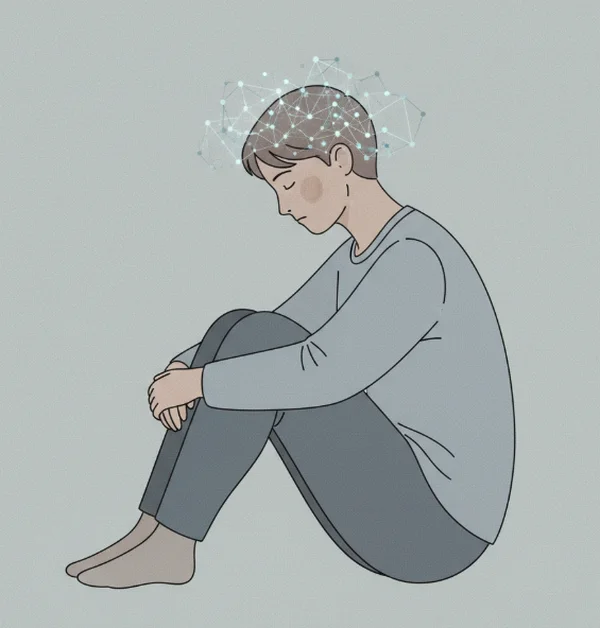
From a neurological standpoint, anhedonia is more than just "feeling down." It is a specific dysfunction in the brain's reward processing system. While we often group all "unhappy" feelings together, neuroscience shows us that anhedonia has its own unique biological signature. This signature differs significantly from other emotional states like sadness or anxiety.
What Is Anhedonia? Beyond Simple Sadness
Anhedonia is defined as the reduced ability to experience pleasure or a diminished interest in rewarding activities. Scientists generally divide it into two main types: anticipatory anhedonia (wanting) and consummatory anhedonia (liking).
The Distinction Between Wanting and Liking
Anticipatory anhedonia is the loss of motivation to pursue a goal. In contrast, consummatory anhedonia is the lack of enjoyment during the activity itself. In the brain, these two types involve different neural networks.
If you find yourself thinking, "Why bother?" you might be experiencing a breakdown in your brain's motivation circuits. If you find yourself doing something fun but feeling "numb" while doing it, your pleasure-reception circuits may be underactive. Using a scientific anhedonia test can help you identify which of these areas is most affected in your daily life.
How Anhedonia Differs from Depression: Key Neurological Distinctions
While anhedonia is a core symptom of Major Depressive Disorder (MDD), it can exist on its own. It is also found in conditions like schizophrenia or chronic stress. Neurologically, depression often involves high levels of negative affect, such as sadness, guilt, or worthlessness. Anhedonia, however, is characterized by a "low positive affect." This is the absence of good feelings rather than the presence of bad ones.
Brain imaging studies show that depression might involve overactivity in the brain's "pain" centers. Conversely, anhedonia is marked by underactivity in the "pleasure" centers. This distinction is crucial. Traditional treatments that target sadness might not always address the specific neural "numbness" associated with anhedonia. Identifying this specific symptom through an online tool is a vital step in seeking the right kind of help.
The Dopamine System: Your Brain's Pleasure Pathway
Dopamine is central to pleasure. Often called the "feel-good" chemical, it's actually more about "seeking" and "learning" than pure bliss. As the primary neurotransmitter in the brain's reward system, dopamine fuels our motivation.
Dopamine Function: Beyond Reward and Motivation
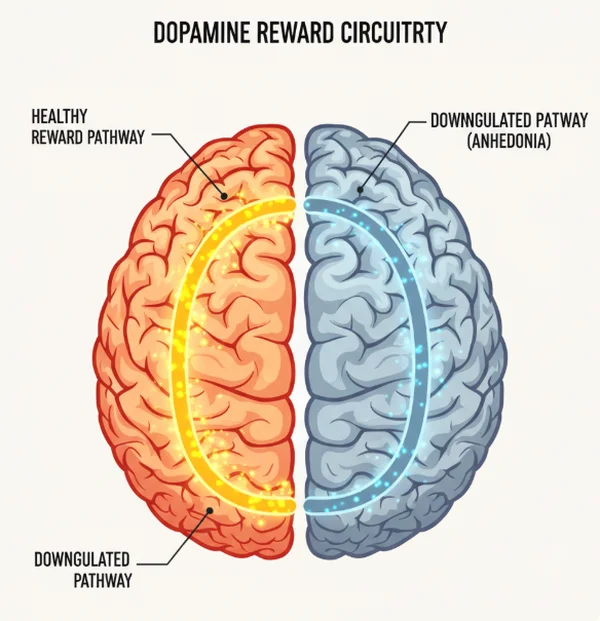
Dopamine travels along specific pathways in the brain, most notably the mesolimbic pathway. Its job is to signal the "salience" or importance of a reward. When your brain expects something good, dopamine levels spike. This provides the energy and focus to pursue rewards. That's why you feel excited before a first date or when opening a gift.
The Role of Reward Prediction Error
Dopamine is also responsible for "reward prediction error." This process helps the brain learn which actions lead to good outcomes. If your dopamine system is healthy, you feel a sense of accomplishment when you finish a task. If the system is off-balance, the "spark" that drives you to start or complete things may disappear entirely.
When the Reward System Falters: Anhedonia and Dopamine Dysregulation
In a brain experiencing anhedonia, the dopamine system is often "downregulated." This means the brain’s receptors become less sensitive to dopamine. Alternatively, the brain may stop producing enough of it. Think of it like a radio where the volume knob is broken. The music is playing, but you cannot hear it.
When this dysregulation occurs, the brain can no longer calculate the value of a reward. A person might know that seeing a friend is "supposed" to be fun. However, the brain doesn't release the chemical signal to make it feel worth the effort. This creates a cycle of withdrawal and isolation. To see if your reward system is showing these signs, you can take the test today for an anonymous assessment.
Neurotransmitters and Brain Circuits in Anhedonia
While dopamine is the star of the show, it does not work alone. Anhedonia is the result of a complex interplay between several neurotransmitters and specific regions of the brain that govern our emotions.
Serotonin, Norepinephrine, and the Mood-Pleasure Connection
Serotonin and norepinephrine also play supporting roles in how we process joy. Serotonin is largely responsible for mood stability and "satiety"—the feeling of being content and at peace. When serotonin is low, it can contribute to the irritability and low energy that often accompany a loss of pleasure.
Norepinephrine is linked to alertness and physical energy. If this neurotransmitter is lacking, even simple tasks feel physically exhausting. The combination of low dopamine, low serotonin, and low norepinephrine creates a "perfect storm" for deep emotional numbness. Understanding this chemistry helps explain why "just snapping out of it" is biologically impossible.
The Prefrontal Cortex and Limbic System: Emotional Processing Centers
Anhedonia primarily involves two brain regions: the Prefrontal Cortex (PFC) and the Limbic System. Think of the PFC as the brain's "CEO"—it handles decision-making and evaluates whether rewards are worth pursuing. The Limbic System, including the amygdala and nucleus accumbens, serves as the brain's "emotional engine."
The Executive Function of the PFC
For people with anhedonia, communication between these brain regions often breaks down. The PFC might over-analyze situations, concluding they're not worth the effort. This effectively "shuts down" the emotional response before it can begin. This "top-down" inhibition has become a major focus in modern neuroscience research.
Emerging Research: Inflammation, Genetics, and Anhedonia
Science is constantly uncovering new reasons why our pleasure pathways might fail. Two of the most exciting areas of study involve our immune systems and our DNA.
The Inflammation Connection: How Immune System Affects Pleasure Processing
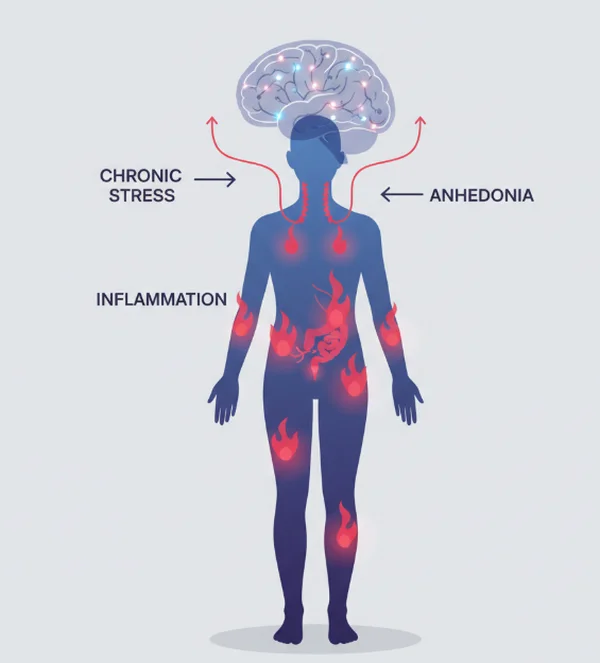
Recent studies have found a strong link between chronic inflammation and anhedonia. When your body is fighting an infection or dealing with chronic stress, it releases proteins called cytokines. These cytokines can travel to the brain and interfere with dopamine production.
The Impact of Chronic Stress and Cytokines
This is sometimes called "sickness behavior." Evolutionarily, it made sense: when you were sick, your brain shut down your desire to go out so you could save energy to heal. However, in the modern world, chronic stress can trigger this same "shutdown" response even when we aren't physically ill. This leads to long-term anhedonia. Reducing systemic inflammation through lifestyle changes can often help improve your mood.
Genetic Predisposition: Is Anhedonia Inherited?
Research suggests that genetics do play a role in pleasure processing. Certain people carry variations in genes that control dopamine receptors, such as the DRD2 gene. These variations can make a person naturally less sensitive to rewards from a young age.
While genetics aren't destiny, knowing your family history provides context. You might struggle more than others to find joy in daily life due to these biological blueprints. Combined with environmental factors like childhood trauma or prolonged stress, these genetic markers increase the likelihood of developing anhedonic symptoms.
From Brain Science to Personal Experience: Making Sense of Your Symptoms
All this talk of neurons and chemicals can feel abstract. However, it has a very real impact on how you live your life. Science helps us validate that what you are feeling is real and has a biological basis.
Translating Neurochemistry to Subjective Experience
When your dopamine is low, it translates to: "I don't feel like doing anything." When your PFC-Limbic connection is weak, it translates to: "I feel disconnected from the people I love." When your inflammation is high, it translates to: "I feel heavy and exhausted."
Validating the Biological Basis of Numbness
By putting names to these scientific processes, we can remove the stigma of "laziness" or "weakness." You are not failing; your brain's reward system is simply struggling to function. Recognizing these signs is the first step in reclaiming your capacity for joy.
How Anhedonia Tests Measure These Biological Mechanisms
Since we cannot easily peek inside your brain every day, psychologists use standardized tools like the Snaith-Hamilton Pleasure Scale (SHAPS). These tests ask targeted questions about how you respond to specific rewards. This might include a beautiful sunset, a warm bath, or a social interaction.
The results of an online test provide a snapshot of your reward system's current state. By quantifying your experiences, you can track your progress over time. You can also provide concrete information to a healthcare professional if you choose to seek treatment. It turns a vague "bad feeling" into clear data you can use.
Reclaiming Your Reward System: The Path Forward
The science of anhedonia shows us that the loss of pleasure is a complex biological event. It involves dopamine dysregulation, circuit breakdowns, and even immune system responses. However, the brain is also "plastic." This means it has the ability to change and heal over time. By understanding that your symptoms have a physical root, you can move away from self-blame and toward effective action.
Whether through therapy, lifestyle adjustments, or medical support, the goal is to "retrain" your brain's reward pathways. Knowledge is your most powerful tool in this process. If you’re ready to see where you stand, we encourage you to use our tool to get instant, confidential insights into your emotional health. Rediscovering joy is possible, and it starts with understanding the brain you have today.
Frequently Asked Questions About the Neuroscience of Anhedonia
How do you test for anhedonia from a neurological perspective?
While a brain scan (fMRI) can show reduced activity in the ventral striatum, these are rarely used in daily practice. Instead, clinicians use validated scales like the SHAPS. These tools reflect the functional state of your brain's reward pathways by evaluating your subjective experience of pleasure. You can easily access a version of this anhedonia test online for a quick screening.
What is the root of anhedonia in brain chemistry?
The most common "root" is an imbalance in the dopamine system. This is particularly true regarding how the brain anticipates and responds to rewards. However, other factors like high levels of cortisol (the stress hormone) and inflammatory cytokines also play significant roles in disrupting normal brain chemistry.
What worsens anhedonia?
Anhedonia can be worsened by chronic stress, lack of sleep, and social isolation, all of which further deplete dopamine levels. Additionally, certain medications or high levels of systemic inflammation can increase the feeling of emotional numbness.
How rare is anhedonia?
Anhedonia is actually quite common. It affects up to 70% of people with Major Depressive Disorder. It is also frequently reported by individuals experiencing burnout, chronic stress, or recovering from substance use disorders.
Does anhedonia ever go away? Can brain chemistry be restored?
Yes, brain chemistry is not fixed. Through a process called neuroplasticity, the brain can form new connections and regain sensitivity to neurotransmitters. Treatments such as Cognitive Behavioral Therapy (CBT), regular exercise, proper nutrition, and sometimes medication can help "reboot" the reward system. Identifying the severity of the issue is the first step, which you can do by taking an anhedonia quiz.