Apathy vs. Anhedonia: The Difference Between "Can't" and "Won't"
Experiencing apathy vs anhedonia can feel like staring at a screen for hours, not out of interest, but because you simply cannot summon the energy to do anything else. It is a confusing, often frightening state of "nothingness." You might wonder if you are just lazy, or if your emotions have somehow turned off. This emotional gray zone often points to two distinct psychological concepts that require different approaches.
While they often look the same from the outside—sitting on the couch, withdrawing from friends, ignoring hobbies—the internal machinery is different. One is a failure of motivation (the drive to act), while the other is a failure of pleasure (the ability to enjoy). Understanding this distinction is the first step toward managing it. In this guide, we will break down the science of "wanting vs. liking," provide a checklist, and help you start your anhedonia test journey to understand what you are feeling.
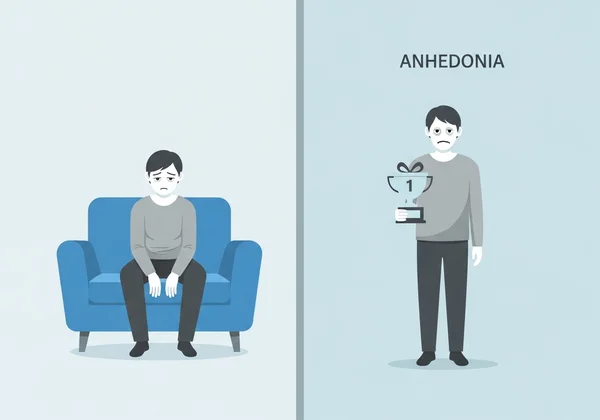
What is the Main Difference Between Apathy and Anhedonia?
At its core, the battle of apathy vs anhedonia is a distinction between the anticipation of a reward and the consumption of a reward. Psychologists and neuroscientists often refer to this as the "Wanting vs. Liking" framework. Although these brain circuits are connected, they operate independently. You can want something without liking it, and you can like something without having the drive to get it.
Defining Apathy: The Struggle with "Wanting" (Motivation Deficit)
Apathy is primarily a deficit of motivation and goal-directed behavior. It is the feeling of "I don't care enough to try."
When you experience apathy, the brain's reward system fails to generate the spark of anticipation. You might intellectually know that going for a walk is good for you, but you feel zero urge to put on your shoes. The effort required to initiate an action feels overwhelming compared to the potential payoff. It is not that you are sad; it is that you are indifferent. You are stuck in neutral, unable to shift into gear.
Defining Anhedonia: The Struggle with "Liking" (Pleasure Deficit)
Anhedonia, on the other hand, is a deficit of pleasure. It is the feeling of "I did it, but it didn't matter."
In this state, you might actually summon the willpower to go to a party or eat your favorite meal. However, once you are there, the positive emotional feedback is missing. The food tastes like cardboard; the music is just noise; the conversation feels hollow. The "reward" you used to get from these activities has vanished. If apathy is a lack of gas in the tank, anhedonia is an engine that runs but goes nowhere.
Key Differences at a Glance (Comparison Table)
To help you clarify what you might be experiencing, here is a direct comparison of how these two symptoms manifest in behavior and emotional experience.
| Feature | Apathy (The "Wanting" Problem) | Anhedonia (The "Liking" Problem) |
|---|---|---|
| Primary Deficit | Lack of motivation or initiative. | Lack of enjoyment or pleasure. |
| Internal Monologue | "Why bother? It's too much effort." | "I feel nothing even when I do this." |
| Reaction to Invite | You refuse because the effort to go seems too high. | You might go, but you feel empty or bored while there. |
| Emotional Tone | Indifference, flatness, "blah." | Numbness, emptiness, disconnection. |
| Key Question | Do you lack the urge to start? | Do you lack the joy when you finish? |
Real-Life Examples: Social Scenarios & Daily Functioning
Abstract definitions are helpful, but seeing apathy vs anhedonia in real-world contexts brings clarity. These symptoms often bleed into our relationships and our ability to take care of ourselves.
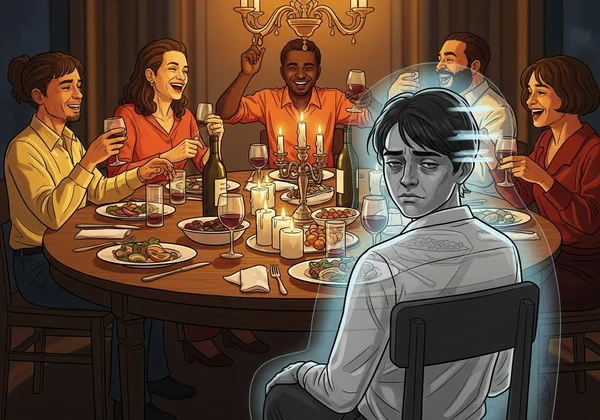
Scenario 1: Social Gatherings (Refusing the Invite vs. Not Enjoying the Party)
Imagine your best friend invites you to a birthday dinner.
If you are dealing with apathy, the process of showering, getting dressed, and driving there feels exhausting. You likely text back, "I'm too tired," and stay home. You don't necessarily feel sad about missing out; you just feel relieved that you don't have to expend energy.
If you are dealing with anhedonia, you might force yourself to go because you know you should. You sit at the table, eat the cake, and smile when everyone laughs. But inside, you feel like an observer behind glass. You don't feel the warmth of connection or the taste of the sugar. You might leave thinking, "That was a waste of time," because the emotional payoff never arrived.
Scenario 2: Daily Chores & Hygiene (Can’t Start vs. Don’t Care)
These struggles also appear in private moments, such as personal hygiene.
- Apathy: You sit on the edge of the bed for 45 minutes needing to shower. You know you need to, but the steps involved (stand up, turn water on, undress) feel like climbing a mountain. It is an execution failure.
- Anhedonia: You take the shower, but the warm water feels purely functional. There is no sense of refreshment or relief afterwards. You do the chore, but because there is no positive reinforcement (that "fresh and clean" feeling), your brain stops reinforcing the habit, making it harder to do next time.
Apathy, Anhedonia, and Avolition: Breaking Down the Terms
In the landscape of mental health, terms often get used interchangeably, but precision matters. Two other concepts—avolition and emotional blunting—often confuse the discussion around apathy vs anhedonia.
Where Does Avolition Fit In?
Avolition is often considered a severe form of apathy, frequently associated with conditions like schizophrenia or severe depression. While apathy is a general lack of interest, avolition is a specific inability to initiate and persist in goal-directed behavior.
If apathy is "I don't want to," avolition is a deeper "I cannot initiate the action." A person with avolition might sit for hours without moving, not because they are relaxing, but because the internal mechanism that turns intention into action is offline.
Is it Emotional Blunting?
You might also hear the term "emotional blunting." This refers to a general reduction in all emotional expression—both positive and negative. If you have anhedonia, you can't feel joy, but you might still feel sadness, anger, or anxiety. If you have emotional blunting, even your sadness feels muffled. You feel "numb" across the board. If this sounds familiar, you might want to explore our anhedonia online test to better understand the nuances of your emotional range.
Self-Reflection: How to Screen for Anhedonia Signs
Recognizing these patterns in yourself can be uncomfortable, but self-awareness is the bridge to feeling better. It is helpful to conduct a quick self-check to see which side of the coin you relate to more.
Why Self-Reflection is the First Step
You cannot manage what you do not define. Identifying whether you are struggling with initiation (apathy) or enjoyment (anhedonia) allows you to choose the right coping tools. For example, pushing yourself to "just do it" works better for apathy than anhedonia.
A Quick "Does This Sound Like Me?" Checklist
Read the following statements. Which group resonates with you more?
Group A (Signs of Apathy/Motivation Loss):
- I have to force myself to do even small tasks like brushing my teeth.
- I spend a lot of time "zoning out" rather than doing hobbies.
- I don't care about the outcome of my work or projects anymore.
- I feel fine doing nothing for long periods.
Group B (Signs of Anhedonia/Pleasure Loss):
- I do my hobbies, but they feel like work now.
- Food, music, or sex doesn't feel as good as it used to.
- I feel disconnected from my friends even when I'm with them.
- I fake smiles so people don't ask what's wrong.
Using the SHAPS Scale to Gain Insight
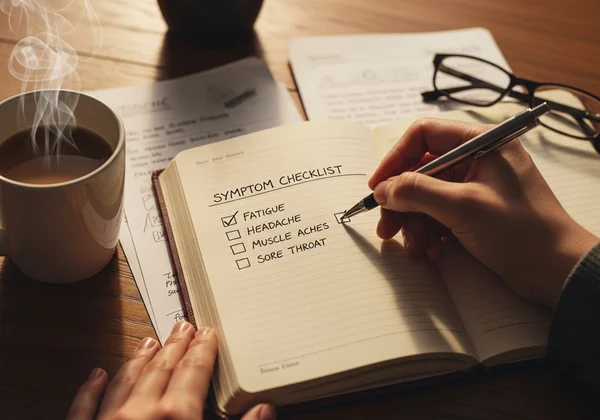
If you found yourself checking multiple boxes in Group B, you might benefit from a more structured screening. Psychologists often use tools like the SHAPS (Snaith-Hamilton Pleasure Scale) to measure the ability to experience pleasure in specific scenarios.
Using a validated screening tool can provide you with a "baseline" score. This isn't a medical diagnosis, but it is a powerful way to visualize what you are going through. You can check your traits with this anhedonia test to see where you fall on the spectrum.
Can You Experience Both Symptoms at the Same Time?
Yes, absolutely. In fact, it is very common.
The Overlap in Clinical Depression
Apathy and anhedonia are both core symptoms of Major Depressive Disorder (MDD). When they combine, they create a self-reinforcing cycle. Because you don't feel pleasure (anhedonia), your brain stops predicting reward, which kills your motivation (apathy). This leads to inactivity, which further reduces opportunities for pleasure.
Understanding the "Mixed" Experience
You might have days where you are purely apathetic, and other days where you try things but feel empty. This "mixed" experience is exhausting. Acknowledging that you are fighting a two-front war is important for self-compassion. You aren't just fighting laziness; you are fighting a disruption in your brain's reward circuitry.
Practical Steps to Manage Motivation and Pleasure
Managing apathy vs anhedonia requires different strategies. What works for one may not work for the other.
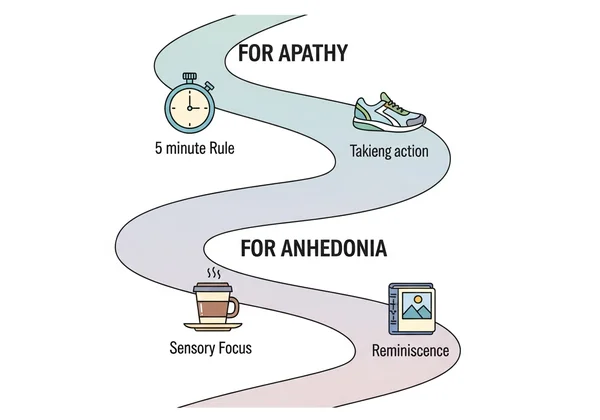
For Apathy: Behavioral Activation Techniques
Since apathy is a "starter motor" failure, you cannot wait until you feel like doing something. You have to use "Behavioral Activation."
- The 5-Minute Rule: Commit to doing a task for only five minutes. Usually, the hardest part is the first 60 seconds.
- Reduce Friction: If you want to run, sleep in your running clothes. If you want to draw, leave the sketchbook open on the table. Make the desired action the path of least resistance.
- External Accountability: Body doubling (working alongside someone else) bypasses the need for internal drive.
For Anhedonia: The Art of "Savoring"
Pushing through doesn't fix anhedonia; it just leads to burnout. Instead, focus on "Savoring."
- Sensory Focus: When you drink coffee, close your eyes. Focus 100% on the heat and the smell. Try to amplify the sensory input.
- Lower Expectations: Don't go to a movie expecting to be thrilled. Go with the goal of noticing three details. Removing the pressure to "be happy" can paradoxically make space for enjoyment.
- Reminiscence: Look at old photos of happy times. Research suggests that remembering past pleasure can sometimes jumpstart the neural pathways for current pleasure.
Summary and When to Seek Support
Understanding the nuance of apathy vs anhedonia helps you stop blaming yourself. Apathy is the inability to "want," and anhedonia is the inability to "like." Both are valid, biological responses to stress, burnout, or mental health conditions.
- Apathy: Focus on small steps and reducing friction.
- Anhedonia: Focus on sensory experiences and patience.
- Avolition: Focus on routine and basic functioning.
If these feelings persist for more than two weeks, impact your ability to work, or lead to thoughts of self-harm, please seek professional support. A therapist can help untangle these threads. For those still exploring their symptoms, reading our comprehensive anhedonia guide or taking an assessment can be a helpful next step to share with a professional.
Frequently Asked Questions
Which is considered more severe: apathy or anhedonia?
Neither is inherently "more severe," but they impact life differently. Apathy can be more disabling regarding employment and hygiene because tasks simply don't get done. Anhedonia is often more distressing emotionally because the person is aware of the joy they are missing, which can lead to deeper despair.
Is apathy just laziness?
No. Laziness is usually a choice—you choose to prioritize leisure over work. Apathy is involuntary; you may want to have the motivation, but you cannot summon it. The distress you feel about your lack of action is a key sign that it isn't laziness.
Is anhedonia permanent?
Rarely. Anhedonia is typically a symptom of an underlying issue (like depression, stress, or medication side effects). When the underlying cause is treated, the ability to feel pleasure usually returns, though it may be gradual.
Can medication side effects cause apathy?
Yes. Some antidepressants, particularly SSRIs, can cause "emotional blunting" or apathy as a side effect. If you notice you feel less anxious but also less motivated after starting medication, talk to your doctor. Do not stop medication abruptly.
How do I explain this to my doctor?
Be specific using the terms you learned. Instead of saying "I'm depressed," say "I have no motivation to start tasks (apathy)" or "I am doing things but feeling no joy (anhedonia)." This helps them tailor your treatment plan effectively.