Condition of Not Feeling Medical Term: What It Means
If you searched for the condition of not feeling medical term, the most accurate answer depends on what kind of "not feeling" you mean. Loss of physical sensation is usually called anesthesia or numbness. Difficulty identifying emotions may be described as alexithymia. Reduced ability to feel pleasure is called anhedonia. Low motivation and emotional expression may be called apathy. Lack of awareness of one's own condition is anosognosia. These terms are easy to confuse because everyday language uses "feeling" for body sensation, emotion, pleasure, motivation, and insight. If your question is about emotional numbness or loss of joy, a gentle anhedonia self-reflection tool can help you organize what you are noticing before deciding whether to seek professional support.

The Short Answer: No Feeling Can Mean Different Things
The phrase "condition of not feeling" sounds simple, but medicine and psychology split it into several different concepts. A student looking for a medical terminology answer may need anesthesia, from the Greek idea of lack of sensation. A person describing a numb hand, face, or foot may also use numbness, hypoesthesia, or paresthesia depending on the exact symptom. Someone saying "I cannot feel my emotions" may be closer to alexithymia or emotional numbness. Someone saying "I cannot enjoy anything" is closer to anhedonia.
So the best first move is not memorizing one word. It is asking: "What kind of feeling is missing?" The answer changes the term.
Root Word and Suffix Breakdown
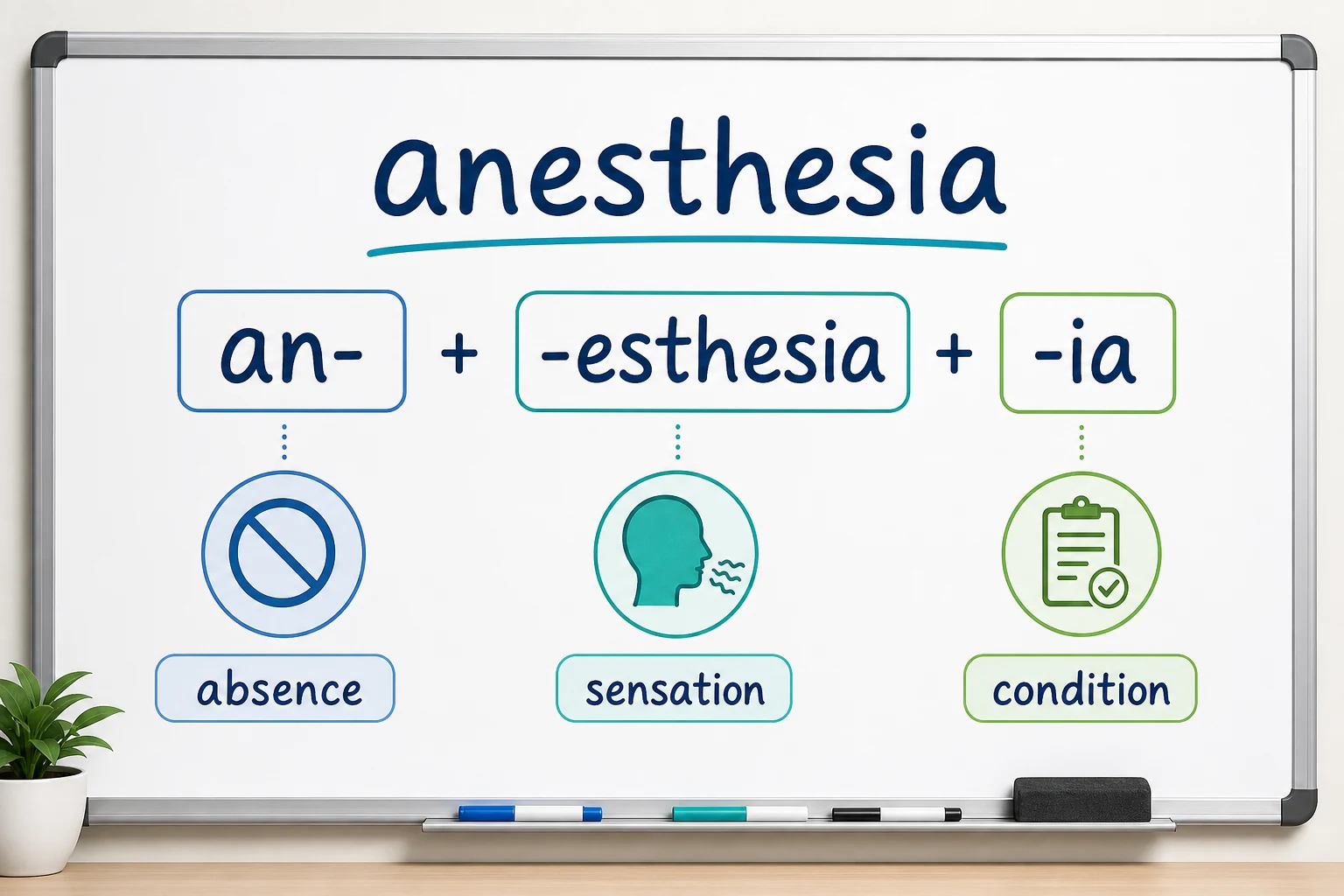
For the query condition of not feeling medical term root word, the classic word to know is anesthesia. It can be understood in parts:
- an- means without or lack of.
- esthesi/o or -esthesia refers to sensation or feeling.
- -ia often marks a condition or state.
Put together, anesthesia means a state involving loss of sensation or awareness. In everyday healthcare use, anesthesia often refers to medicines used so a person does not feel pain during a procedure, but the word-building logic is broader: without feeling or sensation.
Related terms use the same sensation root. Hyperesthesia means increased sensitivity. Hypoesthesia means reduced sensitivity. Paresthesia means an abnormal sensation, often described as tingling, prickling, burning, or pins and needles. These are body-sensation terms, not emotional terms.
This is where many search results and quiz-style answers get blurry. If a class asks, "What is the medical term for without feeling or sensation?" anesthesia is usually the expected answer. If a person asks, "Why do I not feel emotions or pleasure?" anesthesia is probably the wrong word, even though it literally involves not feeling.
Physical Sensation: Anesthesia, Numbness, Hypoesthesia, and Paresthesia
When "not feeling" means no touch, pain, temperature, or pressure in part of the body, the language is sensory. The broad medical word is anesthesia, especially when the loss of sensation is produced by medicine. Regional anesthesia can make a body area temporarily lose feeling while a person stays awake. General anesthesia involves a larger medical state that may include lack of awareness.
Numbness is the everyday symptom word. It can describe reduced or absent sensation in the skin, limbs, face, mouth, or another area. Hypoesthesia is a more technical term for decreased sensitivity. Paresthesia is different: it describes abnormal sensations, not simply no sensation. Tingling in a foot after sitting awkwardly is a familiar mild example, though persistent or unexplained sensations deserve medical attention.
Pay attention to pattern. A brief numb patch after pressure on a limb may be less concerning than sudden weakness, facial drooping, chest pain, severe headache, confusion, injury, or numbness that spreads or persists. This article is educational, so it cannot tell you what is causing a symptom. New, sudden, severe, or one-sided physical numbness is a reason to contact emergency or medical care promptly.
The main takeaway: if the missing feeling is physical sensation, start with anesthesia or numbness. If the missing feeling is emotional, keep reading.
Emotional Feeling: Alexithymia and Emotional Numbness
When someone asks "a person without emotions is called what?" the answer is rarely "without emotions" in a literal sense. Many people who seem distant, blank, or hard to read still have emotions; they may have trouble noticing them, naming them, expressing them, or connecting them to body signals.
Alexithymia is the term most often used for difficulty identifying and describing emotions. It is sometimes described as emotional blindness, but that phrase can be misleading if taken too literally. Alexithymia is not simply being cold or uncaring. It can involve confusion about whether a body sensation is anxiety, anger, sadness, fatigue, hunger, or something else. It can also make conversations about feelings harder because the internal signal is vague.
Emotional numbness is a broader phrase. It may show up during stress, grief, burnout, trauma responses, depression, medication changes, or long periods of overload. Some people describe it as "I know I should feel something, but nothing lands." Others can function through the day but feel separated from their reactions.
If your main concern is emotional numbness, it can help to track context: when it started, whether it changes across the day, whether pleasure is also reduced, whether you feel detached from people, and whether sleep, substance use, stress, or recent life events changed around the same time. A structured emotional numbness reflection tool can support that kind of note-taking without turning the result into a medical conclusion.

Pleasure and Motivation: Anhedonia vs Apathy
Anhedonia and apathy are two common terms that people mix together. Both can feel like "not feeling," but they point to different parts of human experience.
Anhedonia means reduced ability to experience pleasure or interest in activities that used to feel rewarding. It may affect social connection, hobbies, food, music, sex, achievement, or anticipation of future events. A person with anhedonia may still complete tasks, care about loved ones, and want things to improve, but the usual sense of reward feels muted or absent.
Apathy is more about reduced motivation, goal-directed activity, spontaneity, interest, or emotional expression. A person with apathy may not initiate activities, may rely on prompting, or may seem unconcerned about changes that worry others. In medical contexts, apathy can appear with neurological conditions as well as some psychological conditions.
Here is a practical way to separate them:
- If the problem is "I do things, but they do not feel good," think anhedonia.
- If the problem is "I cannot get myself to start or care enough to act," think apathy.
- If the problem is "I cannot name what I feel," think alexithymia.
- If the problem is "I cannot feel touch or pain normally," think sensory numbness or anesthesia.
These experiences can overlap. For example, a person might have anhedonia and also feel emotionally numb. Someone else may have apathy without a strong loss of pleasure. Because overlap is common, it is better to describe the pattern in plain language than to force one label too quickly.
Where Anosognosia Fits
Anosognosia is another search term that appears beside "condition of not feeling medical term," but it answers a different question. It does not mean no physical sensation or no emotion. It means lack of awareness or insight into one's own illness or condition. The term is often discussed in relation to certain mental health and neurological conditions.
This distinction is important. A person with alexithymia may know something is happening but struggle to describe emotions. A person with anhedonia may recognize that joy or reward feels reduced. A person with anosognosia may not perceive their own condition accurately, even when people around them notice clear changes.
For SEO searchers, the easiest memory cue is this: anesthesia concerns sensation, alexithymia concerns emotion words, anhedonia concerns pleasure, apathy concerns motivation, and anosognosia concerns awareness of illness.
A Plain-Language Sorting Checklist
Use this checklist to choose the closest term for what you mean by "not feeling." It is not a medical assessment, but it can make your wording clearer.
- Is the missing feeling touch, pain, temperature, pressure, or bodily sensation? Use terms like numbness, anesthesia, hypoesthesia, or paresthesia.
- Is the problem that emotions are present but hard to identify or explain? Alexithymia may be the closest term.
- Is the problem reduced joy, interest, or reward from things that used to matter? Anhedonia may fit better.
- Is the problem low motivation, low initiation, or reduced goal-directed behavior? Apathy may be closer.
- Is the problem that a person seems unaware of a condition others can observe? Anosognosia is the term to learn.
- Is the phrase "not feeling well" about illness, fatigue, nausea, pain, fever, or general malaise? Then the right phrase may simply be feeling unwell or malaise, not one of the terms above.
For healthcare conversations, combine the term with examples. "I have numbness in my left hand" is clearer than "I have anesthesia." "I cannot enjoy music or food the way I used to" is clearer than using anhedonia alone. "I have trouble naming emotions until hours later" is clearer than using alexithymia alone.

How to Use These Terms Safely
Medical language is useful when it helps you communicate, but it can become confusing when it replaces your own observations. If you are studying terminology, the condition of not feeling medical term answer is usually anesthesia, with an- meaning without and -esthesia meaning sensation. If you are trying to describe your lived experience, start with the most concrete details you can.
For body sensation, note location, timing, triggers, whether the sensation is reduced or abnormal, and whether there are other symptoms. For emotional numbness, note whether you can feel sadness, anxiety, anger, tenderness, humor, or relief. For anhedonia, note whether the change is about wanting, liking, anticipation, social enjoyment, physical pleasure, or all of these. For apathy, note whether the issue is not starting, not caring, or not expressing.
It is also reasonable to use cautious language with a clinician or counselor: "I read that this might be called anhedonia, but I am not sure. What else could explain it?" That framing leaves room for a professional evaluation while still giving you vocabulary.
If your concern is specifically reduced pleasure or emotional numbness, AnhedoniaTest.com offers a pleasure-loss screening guide designed for self-exploration. Use it as a starting point for reflection, not as a replacement for professional care, especially if symptoms are intense, persistent, sudden, or connected with thoughts of self-harm.
FAQ
What is the medical term for not feeling?
If "not feeling" means loss of physical sensation, the broad medical term is anesthesia. If it means emotional numbness, alexithymia, anhedonia, or apathy may be more relevant depending on the exact experience.
What is the medical term for no sensation?
No sensation may be described as anesthesia or numbness. Decreased sensation may be called hypoesthesia, while abnormal tingling or prickling sensations are often called paresthesia.
What is the medical term for without feeling or sensation?
Anesthesia is the classic medical terminology answer. The word can be broken into an-, meaning without, and -esthesia, meaning sensation or feeling.
What is the medical term for not being able to feel anything?
It depends on what "anything" means. Not feeling touch or pain points toward sensory terms such as anesthesia or numbness. Not feeling pleasure points toward anhedonia. Trouble identifying emotions points toward alexithymia.
What is alexithymia?
Alexithymia means difficulty identifying, understanding, or describing emotions. It does not necessarily mean a person has no emotions; the difficulty is often with recognizing and putting words to them.
Is anosognosia the same as emotional numbness?
No. Anosognosia means limited awareness or insight into one's own condition. Emotional numbness means feeling detached, muted, or unable to access emotional responses.
Is not feeling well the same as not feeling emotions?
No. "Not feeling well" usually means feeling physically unwell, fatigued, sick, or generally off. Not feeling emotions is a different concern and may involve emotional numbness, alexithymia, anhedonia, stress, or other factors.