Opposite for Pleasure: What It Means When Enjoyment Feels Far Away
The simple opposite for pleasure is often listed as displeasure, but real life is usually less tidy than a thesaurus entry. Some people feel active discomfort, irritation, or aversion. Others feel a quieter blankness: they know something should be enjoyable, romantic, funny, or meaningful, yet their inner response stays muted. If that second description sounds familiar, a phrase like "opposite of pleasure" may be pointing toward emotional numbness, low interest, or possible anhedonia rather than ordinary dislike. For a gentle starting point, you can use a gentle anhedonia self-reflection tool to put language around what has changed without treating a score as a medical answer.

What Is the Opposite for Pleasure?
In ordinary vocabulary, the main antonym for pleasure is displeasure. Displeasure means dissatisfaction, annoyance, or a negative reaction to something. If someone says, "I felt displeasure," they usually mean they disliked what happened.
Other related antonyms include pain, distress, misery, unhappiness, and dissatisfaction. These words are useful, but they are not interchangeable. Pain suggests suffering. Distress suggests emotional strain. Unhappiness is broad. Dissatisfaction means something did not meet a need or expectation. Displeasure is closer to the direct opposite of pleasure in a dictionary sense.
The keyword "opposite for pleasure" can also come from searches about wording, such as "pleasure antonym," "pleasure opposite word," or "please opposite." In that narrow language question, the answer is simple: pleasure contrasts with displeasure, and pleased contrasts with displeased.
But people rarely search emotionally loaded words for vocabulary alone. Someone may type "opposite of pleasure" because the word "sad" does not fit, "angry" feels too strong, and "bored" feels too small. They may be trying to name a missing response.
When the Opposite of Pleasure Is an Experience, Not Just a Word
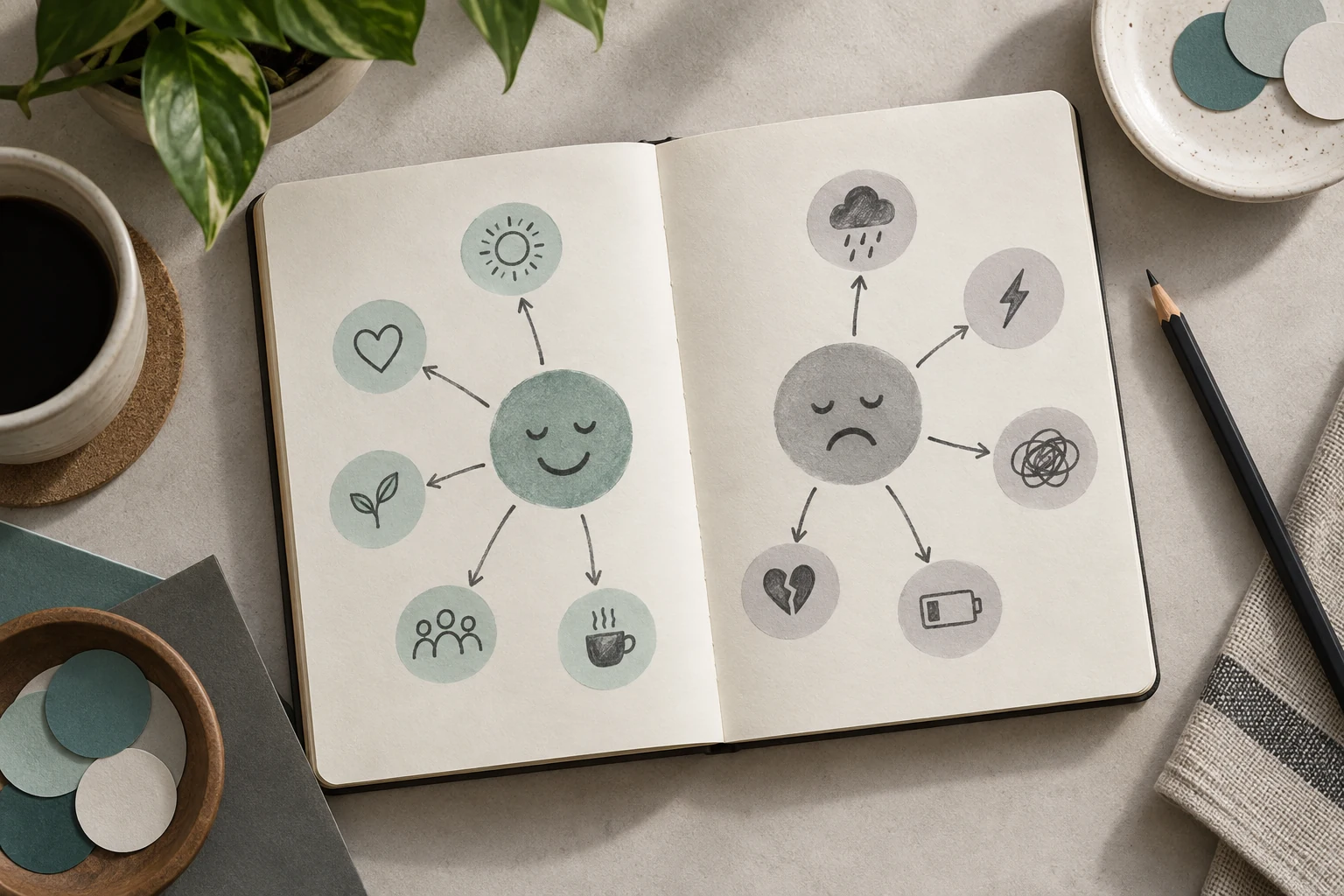
There is an important difference between displeasure and low pleasure. Displeasure is an active negative response. Low pleasure can feel like absence, distance, or a flat signal.
For example, displeasure might sound like: "I hated that movie," "That conversation irritated me," or "I do not want to do that again." Low pleasure might sound like: "It was fine, but I felt nothing," "I used to care about this," or "Everyone else seems excited, and I cannot get there."
That distinction matters because many people who wonder why they do not like anyone are not always filled with dislike. They may feel neutral, detached, selective, tired, socially drained, guarded, or unable to access anticipation. The experience can look like not enjoying people, but the underlying pattern may be more specific.
Anhedonia is often described as reduced ability to feel pleasure or interest. It can affect social connection, hobbies, food, sex, achievement, music, humor, or future plans. It does not mean a person is cold or incapable of caring. It also does not automatically explain every case of low interest. Personality, stress, burnout, grief, trauma history, relationship patterns, medication effects, sleep disruption, and depression-related symptoms can all change how pleasure feels.
If your question is less "What is the antonym?" and more "Why does nothing feel rewarding?", an anhedonia-focused screening experience may help you organize your observations. It is best understood as educational support, not as a replacement for a qualified professional's evaluation.
Why You Might Not Like Anyone Romantically or Socially
Searches such as "Why don't I like anyone romantically?" or "Is it normal to not like anyone romantically?" often mix several different concerns. Some are about attraction. Some are about emotional safety. Some are about pleasure, reward, and interest.
One possibility is simple selectiveness. You may need more time, shared values, or emotional familiarity before interest appears. That is not automatically a problem. Some people experience attraction rarely or only after trust builds. Others are introverted, socially low-energy, or uninterested in conventional dating rhythms.
Another possibility is protection. If closeness has often led to rejection, criticism, pressure, or disappointment, the mind may learn to keep people at a distance. The result can feel like "I do not like anyone," when the deeper pattern is "I do not feel safe enough to become interested." Competitor articles commonly frame this through trust, attachment, past hurt, and defensive distance, which are useful lenses as long as they are not turned into labels too quickly.
A third possibility is emotional flattening. When reward signals are muted, people may still understand that someone is kind, attractive, funny, or compatible, but the feeling of pull does not arrive. This can be especially confusing because the person may want to want connection. They are not rejecting everyone with certainty; they are watching their own interest fail to switch on.
Finally, context matters. Chronic stress, isolation, too much online comparison, exhausting work, poor sleep, and a steady diet of negative news can make other people feel more irritating or less worth the effort. Sometimes "I do not like people" is not a stable identity. It is a state that has been repeated long enough to feel like one.

A Gentle Self-Check for Pleasure Loss
When you are trying to understand the opposite for pleasure in your own life, it helps to separate four questions.
First, ask whether the issue is dislike. Do you actively dislike the person, activity, or situation? Do you feel annoyance, disgust, resentment, or a clear wish to avoid it? If yes, "displeasure" may be the right word.
Second, ask whether the issue is absence. Do you feel mostly blank, neutral, or unmoved even when there is no strong negative feeling? Do you remember enjoying something but cannot feel that enjoyment now? This points less toward displeasure and more toward reduced pleasure or emotional numbness.
Third, ask whether the issue is anticipation or in-the-moment enjoyment. Some people can enjoy an activity once they begin, but they cannot look forward to it. Others can anticipate something but feel flat during it. These are different patterns, and noticing the difference can make your next step more precise.
Fourth, ask whether the change is specific or broad. Not liking one person, one dating app, or one social environment may simply be preference. Losing interest across many parts of life deserves more attention, especially if it lasts, affects functioning, or comes with sleep, appetite, energy, concentration, or mood changes.
You can write down three recent moments that "should" have felt good and rate what happened: anticipation, enjoyment during the event, afterglow, and any active displeasure. The goal is not to force a feeling. It is to gather clearer language.
What To Do Next If Enjoyment Feels Muted
Start with a low-pressure inventory. List what still produces even a small positive signal: a song, a shower, a certain texture, a quiet walk, a trusted person, a pet, a familiar game, a satisfying task, or a meal that is easier to eat. Tiny signals count. The point is to notice what remains available instead of judging what is missing.
Then reduce avoidable noise where you can. Sleep debt, overstimulation, conflict, substance use, doomscrolling, and constant self-comparison can all make pleasure harder to detect. You do not need a perfect lifestyle before seeking support, but small changes can make your observations less muddy.
It may also help to test connection in smaller formats. If romance feels impossible, try low-stakes warmth: a short message, a shared interest group, a predictable routine with one safe person, or a structured activity where conversation is not the whole focus. If small talk drains you, choose contexts where doing something together carries the interaction.
Consider professional support if the flatness is persistent, distressing, linked with trauma or depression symptoms, or making daily life narrower. A clinician can help sort through mood, medication, stress, neurodivergence, grief, relational fear, and other factors with more nuance than an online article can provide.
Reframing Opposite for Pleasure Without Blaming Yourself
The opposite for pleasure may be displeasure in a dictionary, but in lived experience it can be numbness, low reward, guardedness, exhaustion, or the absence of emotional color. Naming that difference is kinder and more useful than accusing yourself of being broken, shallow, cold, or impossible to please.
A practical next step is to track patterns without making a final story about yourself. Notice whether pleasure is missing everywhere or only around certain people. Notice whether you feel worse after social media, conflict, poor sleep, or pressure to perform attraction. Notice whether tiny enjoyable moments still break through when conditions are gentler.
If you want a structured place to begin, a calm first step for exploring pleasure loss can help you reflect on anhedonia-related patterns and decide what you may want to discuss with a professional. The aim is not to force joy on command. It is to understand what kind of "opposite" you are actually experiencing, so the next step fits the real problem.
FAQ
What is the opposite for pleasure?
The most direct opposite for pleasure is displeasure. Depending on context, related opposites include pain, distress, dissatisfaction, misery, or unhappiness. If you mean a lack of enjoyment rather than active dislike, phrases like reduced pleasure, low interest, emotional numbness, or anhedonia may be more accurate.
Is displeasure the same as anhedonia?
No. Displeasure is an unpleasant reaction. Anhedonia refers to reduced ability to feel pleasure or interest. Someone with displeasure may strongly dislike something. Someone with anhedonia-like experiences may feel little response even toward things they used to enjoy.
Why don't I like anyone romantically?
There are many possible reasons. You may be selective, not interested in romance right now, slow to develop attraction, guarded because of past hurt, socially exhausted, or experiencing muted reward and interest. If the pattern bothers you or feels like a major change, it can be worth exploring with professional support.
Is it normal to not like people?
It can be normal to need solitude, dislike certain social settings, or connect with only a small number of people. It may deserve more attention if you feel broadly numb, bitter, isolated, distressed, or unable to enjoy relationships you actually want.
What is it called when you don't like anyone sexually?
It depends on what you mean. Some people experience little or no sexual attraction as part of their orientation. Others notice a change in sexual interest because of stress, medication, relationship context, mood symptoms, trauma, hormonal factors, or anhedonia-like pleasure loss. A qualified professional can help if the change is unwanted or concerning.
Can pleasure come back after a numb period?
Many people do report that pleasure becomes easier to notice again when the underlying strain is addressed, but the path varies. Support, rest, treatment for relevant conditions, safer relationships, behavioral activation, and time can all play a role. Avoid pressuring yourself to feel better instantly; pressure often makes observation harder.