Why Am I Never Happy? How to Read the Feeling Without Blaming Yourself
If you keep asking "why am I never happy," it does not automatically mean you are ungrateful, broken, or doomed to feel this way forever. It may mean your mind and body are trying to flag a pattern: chronic stress, comparison, unmet needs, emotional numbness, burnout, relationship strain, or a loss of pleasure that needs gentler attention. A useful first step is to name what kind of "not happy" you mean. If joy feels muted or hard to access, a gentle self-reflection tool can help you organize the experience without turning it into a label.
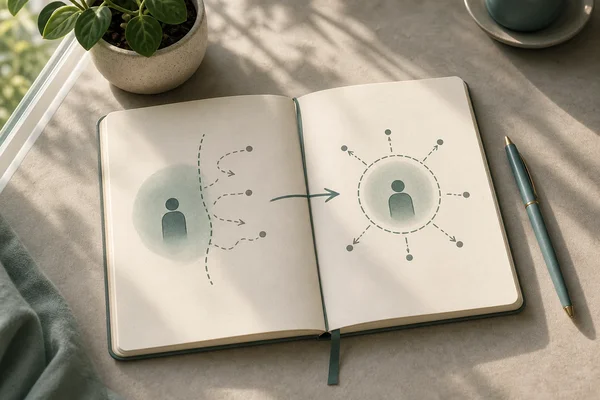
What It Can Mean If You Never Feel Happy
"Never happy" can describe several experiences. One person may still laugh and enjoy small things, but feels restless because every achievement quickly becomes "not enough." Another person may feel emotionally flat, as if favorite music, food, hobbies, or social moments no longer land. Someone else may feel trapped by a job, relationship, body image worry, or living situation that keeps draining them.
Those differences matter. The phrase "why am I never happy in life" sounds broad, but the useful question is more specific: are you unable to feel pleasure, feel satisfied, rest, or imagine a future that feels like yours? Happiness is not a switch you can command. It often depends on sleep, safety, connection, meaning, nervous system load, expectations, and whether daily life gives you enough chances to notice reward.
It is normal for happiness to fluctuate. The concern is duration, intensity, and impact. If the feeling lasts for weeks, narrows your life, changes sleep or appetite, affects work or relationships, or comes with thoughts of self-harm, it deserves support from a qualified professional or crisis service. In the U.S., calling or texting 988 can connect you with immediate crisis support.
Why Am I Never Happy With Myself?
When the unhappiness points inward, it often has less to do with who you are and more to do with the standard you are using to judge yourself. Some people live with an internal scoreboard that resets the moment they succeed. You finish the task, but the mind says it should have been faster. You improve your health, but the mirror finds a new flaw. You make progress, but someone online seems further ahead.
This is where "a person who is never satisfied with anything" can become an unfair identity. A kinder description is a satisfaction loop: relief arrives briefly, then the brain searches for the next gap. That loop can be driven by perfectionism, shame, comparison, fear of falling behind, family expectations, or a belief that self-criticism is the only way to stay motivated.
Try this quick sorting exercise:
- Write one thing you believe would finally make you happy.
- Ask whether it would create relief, pleasure, safety, status, connection, or meaning.
- Ask how long you expect the feeling to last.
- Ask what you would say to a friend who reached the same goal and still felt empty.
The point is not to talk yourself out of wanting a better life. It is to notice when the promise has become unrealistic: "Once this changes, I will be allowed to feel okay." A more workable goal is building small experiences of okayness before everything is solved.
Why Am I Never Happy With What I Have?
Not being happy with what you have can come from ingratitude, but it often comes from something more complicated. Humans adapt. The new apartment, relationship, job, body change, or milestone can feel meaningful for a while, then become ordinary. Novelty fades, and the mind starts scanning again.
Comparison makes this sharper. If you constantly measure your life against curated lives, your brain receives a steady stream of "not enough" evidence. Even good things can start to feel like unfinished proof: good, but not as good as theirs; stable, but not exciting; safe, but not impressive.
There is also a difference between gratitude and forced positivity. Gratitude helps when it reconnects you with real details: the friend who answered, the meal that tasted decent, the quiet ten minutes after a long day. It backfires when it becomes a command to ignore pain.
A practical exercise is the "enough for today" list. Choose three categories: body, connection, and meaning. Under each, write one thing that was enough today, not perfect. This trains attention toward sufficiency without pretending your problems disappeared.
When Unhappiness Is Really Pleasure Loss or Emotional Numbness
Sometimes the issue is not dissatisfaction. It is that pleasure feels absent. If you think, "I am never happy anymore," and once-enjoyed things now feel dull, effortful, or strangely far away, you may be describing anhedonia-like experience. Anhedonia is commonly discussed as reduced interest or pleasure, and it can appear alongside depression, stress, trauma responses, substance changes, some medical conditions, or long exhaustion.
The distinction matters because anhedonia-like numbness may not respond to advice such as "be more grateful" or "change your attitude." If your reward system feels muted, you may need a slower approach: tracking patterns, lowering pressure, rebuilding routines, and talking with a mental health or medical professional when the change is persistent or disruptive.
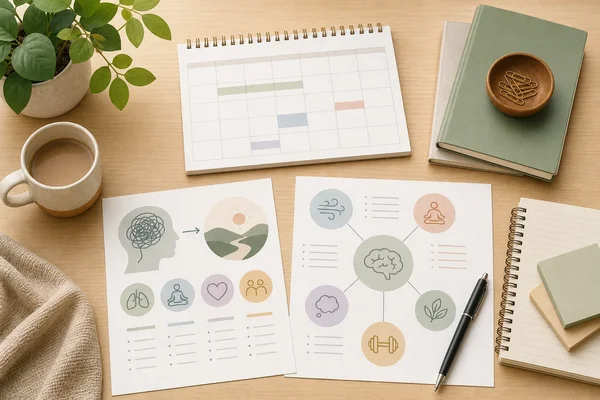
This is where a structured check-in can be useful. AnhedoniaTest.com is built around an educational 14-question screening-style flow inspired by pleasure-scale frameworks, with the important boundary that it is not a medical conclusion. If your main question is whether "never happy" feels closer to emotional numbness or loss of pleasure, the site's pleasure-loss check-in may give you language for what changed.
A Simple Framework for Never Satisfied Psychology
"Never satisfied psychology" usually involves more than one mechanism. These are common patterns, not fixed personality types.
The comparison loop
Your attention keeps moving from your actual life to someone else's highlight. This can make your own progress feel invisible. The shift is to notice what comparison is asking for: admiration, belonging, security, rest, beauty, competence, or reassurance.
The future-arrival trap
This is the belief that happiness starts after the next milestone. A future focus can be useful, but it becomes painful when the present is only a waiting room. If every week is something to endure until life begins, happiness has no place to land.
The threat-loaded nervous system
If you are stressed for a long time, your body may prioritize scanning for danger over noticing enjoyment. In that state, calm can feel boring, pleasure can feel unreachable, and rest can feel undeserved. Recovery may need sleep, pacing, movement, boundaries, and support.
The mismatch problem
Sometimes unhappiness is information. A job may not fit your values. A relationship may lack safety or respect. A city may isolate you. Mindset work helps only so much if the environment keeps asking you to abandon yourself.
What To Do When You Are Not Happy With Life Right Now
When you are not happy with your life right now, start smaller than a life overhaul. Big changes can matter, but a flooded mind often needs a first clear step.
First, name the main flavor of unhappiness. Use one sentence: "I feel flat," "I feel trapped," "I feel behind," "I feel lonely," "I feel exhausted," or "I feel like nothing counts." This reduces the vague threat.
Second, track a short baseline for one week. Each evening, rate four items from 0 to 10: mood, pleasure, energy, and pressure. Add one note about sleep, food, movement, social contact, or conflict. You are not trying to grade yourself. You are looking for patterns.
Third, choose one low-pressure experiment. If you feel lonely, send one honest message. If you feel numb, repeat a small once-liked activity and rate the experience before and after. If you feel stuck in comparison, take a two-day break from the feed that makes you feel smallest. If you feel depleted, protect one recovery block as if it were an appointment.
Fourth, consider support when the pattern is persistent, severe, or hard to understand alone. A therapist, doctor, counselor, or trusted support service can help you separate stress, mood symptoms, physical health, medication effects, grief, trauma, and life circumstances. Getting help is not an overreaction; it is a way to stop carrying the whole question by yourself.

A Gentle Way to Check What Has Changed
Instead of asking "why am I never happy" as a verdict, ask it as an investigation: what changed, when did it change, what still reaches me, and what feels blocked? You do not have to decide whether you are a "happy person" or an "unhappy person." You only need enough clarity to choose the next kind step.
If your experience centers on muted pleasure, emotional numbness, or the sense that once-enjoyable things no longer feel rewarding, an anhedonia self-exploration resource can help you put words around the pattern. Use it as a reflection aid, not as a final answer. Then bring what you notice into a conversation with someone qualified if the pattern is lasting, worsening, or affecting your safety and daily life.
FAQ
What does it mean if you never feel happy?
It can mean many things: chronic stress, burnout, loneliness, perfectionism, grief, comparison, anhedonia-like pleasure loss, depression-related symptoms, or a life situation that does not fit your needs. The key is to look at duration, triggers, body changes, and whether you can still feel interest or pleasure in some settings.
Is it normal to never be truly happy?
It is normal not to feel happy all the time. It is worth paying attention if you rarely feel pleasure, cannot feel satisfied even after meaningful progress, or feel unhappy in a way that disrupts work, relationships, sleep, appetite, or safety.
What is a person who is never happy called?
In everyday language, people may say "chronically dissatisfied" or "unhappy," but labels are usually less useful than patterns. A person may be struggling with stress, unmet needs, comparison, emotional numbness, or a difficult environment rather than having a fixed trait.
Why am I never happy with myself?
You may be using a standard that only notices flaws. Perfectionism, shame, comparison, and fear of falling behind can make progress feel temporary. Try asking what your self-criticism is trying to protect you from, then choose one small action that supports you without attacking you.
Why am I never happy with what I have?
Your mind may adapt quickly to good things, compare upward, or treat each achievement as a stepping stone instead of an experience. It may also mean something real is missing, such as rest, autonomy, connection, or meaning.
What are the 4 F's of happiness?
There is no single universally accepted "4 F's" model of happiness. A more practical personal framework is feelings, functioning, fulfillment, and friendship: how you feel, how daily life is working, whether your actions have meaning, and whether you have enough connection.
Could never feeling happy be related to not being hungry?
Appetite changes can happen with stress, low mood, anxiety, medical issues, medication effects, or routine disruption. If you are "never hungry" in a persistent way, losing weight unintentionally, or struggling to eat enough, it is sensible to speak with a healthcare professional.
Why am I never, ever happy?
When the question feels that intense, try not to answer it alone at 2 a.m. Write down what has changed, whether you feel safe, and who you can contact. If you might harm yourself or cannot stay safe, reach emergency support immediately. If you are safe but stuck, a professional can help you sort the pattern with more care than self-blame can offer.